
How AI-Powered Research Assistance Is Transforming Thesis & Dissertation Writing for UG, PG & PhD Students
The Future of Academic Research Is Changing
Academic research is no longer limited to traditional writing methods, endless manual formatting, or scattered study materials. With the rise of artificial intelligence in education, students and scholars are now using AI-powered research systems to improve research quality, save time, organize information, and simplify complex academic workflows.
From undergraduate projects to PhD dissertations, modern learners are increasingly searching for smarter ways to handle literature reviews, citations, synopsis writing, questionnaire design, and dissertation structuring. According to recent trends in AI and education technology, searches related to “AI for thesis writing,” “research proposal help,” and “literature review assistance” have grown significantly as students look for faster and more organized academic support systems.
This shift is creating a new era of AI-assisted academic research where technology supports learning while human expertise ensures originality, ethics, and professional quality.
Why Traditional Research Workflows Are Becoming Difficult
Research writing requires much more than collecting information from the internet. Students often struggle with topic selection, research gap identification, citation management, formatting rules, and maintaining academic structure throughout the project.
Many scholars spend weeks organizing references, correcting formatting issues, or rewriting chapters because their workflow lacks structure. This becomes even more challenging for postgraduate and PhD students working on dissertations, data analysis, or research methodology.
At the same time, academic institutions are expecting better research quality, stronger analytical thinking, and professionally formatted documentation. As research standards continue to evolve, students need systems that improve productivity without compromising originality or academic integrity.
How AI Is Helping Students & Scholars in Academic Research
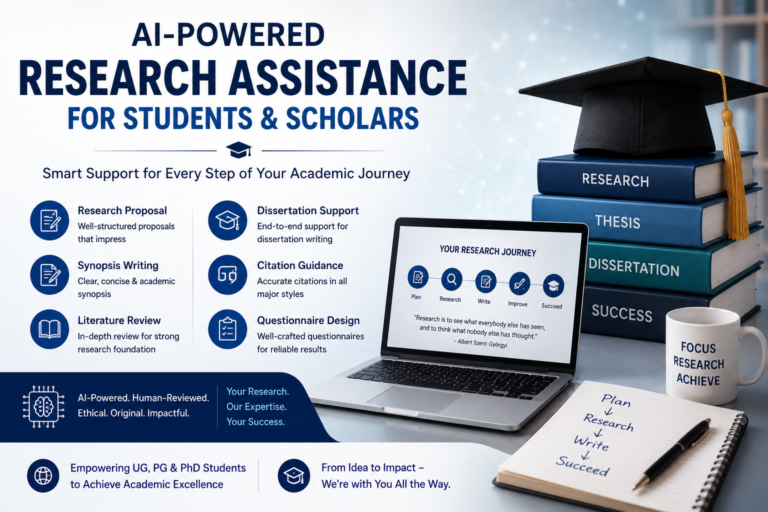
Artificial intelligence is now helping students organize research workflows more efficiently. Instead of replacing human thinking, AI tools are assisting with content structuring, research organization, citation management, summarization, grammar refinement, and academic formatting.
Modern AI-assisted research systems can help students:
- organize literature reviews
- structure dissertations
- improve citation accuracy
- simplify academic documentation
- build research questionnaires
- streamline synopsis development
However, responsible AI usage is extremely important. Human review, subject understanding, and ethical academic practices still remain essential parts of high-quality research writing.
At AGNI, AI is used as a productivity enhancement system rather than a replacement for academic originality. Every workflow combines structured research, AI-assisted organization, and human-reviewed refinement to maintain quality and academic ethics.
The Growing Importance of Literature Reviews & Citation Management
One of the most searched academic support topics today is literature review assistance. A strong literature review helps students understand existing research, identify gaps, and build a solid foundation for their study.
Similarly, citation formatting has become increasingly important because universities now use advanced plagiarism detection and reference-checking systems. Incorrect citations or poor referencing can negatively affect the credibility of a research paper.
AI-assisted citation systems and structured academic workflows are helping students manage references more effectively while reducing formatting errors and improving consistency across research documents.
This is especially useful for students working with APA, MLA, Harvard, or IEEE citation styles.
Ethical AI in Research & Academic Writing
As AI-generated content becomes more common, academic ethics and originality are becoming major concerns in universities and research institutions worldwide.
Students should understand that AI cannot replace critical thinking, analytical understanding, or original research contributions. Ethical AI usage means using technology responsibly to improve workflow efficiency while maintaining transparency, authenticity, and intellectual integrity.
AGNI follows a research-first and ethics-focused approach where every project is reviewed for clarity, structure, originality, and professional quality. Our goal is not simply generating content, but helping students create organized and meaningful academic work that reflects their own research objectives.
Why AI-Assisted Research Support Is the Future
The future of education and academic research will increasingly involve AI-assisted systems. Universities, institutions, and scholars are already adopting digital research workflows, AI learning systems, and intelligent academic support platforms to improve productivity and accessibility.
Students who learn how to combine technology with structured research practices will have a significant advantage in the evolving academic environment.
AI-powered academic systems can help:
- reduce research inefficiencies
- improve documentation workflows
- organize knowledge more effectively
- support scalable learning systems
- simplify academic content management
The key is using AI responsibly with proper human guidance and ethical research practices.
Conclusion
Academic research is entering a new phase where artificial intelligence, structured workflows, and human expertise are working together to improve learning and knowledge development.
For UG, PG, and PhD scholars, AI-powered research assistance is no longer just a trend. It is becoming an essential part of modern academic systems. From dissertation support and literature review organization to citation guidance and synopsis development, intelligent research workflows are helping students create more structured, efficient, and professionally refined academic work.
AGNI aims to support this transformation through ethical AI integration, research-driven systems, and human-centered academic solutions designed for the future of education and knowledge creation.
Need Professional Research Assistance?
If you need support with thesis writing, dissertation structuring, literature reviews, citations, or academic documentation, AGNI provides AI-assisted and human-reviewed research solutions designed for modern students and scholars.
Reference Sources
Google Trends – AI in Education & Research Trends
Google Trends
Research on AI in Higher Education
Frontiers in Education Research
Academic Integrity & AI Usage Insights
UNESCO AI and Education Guidance